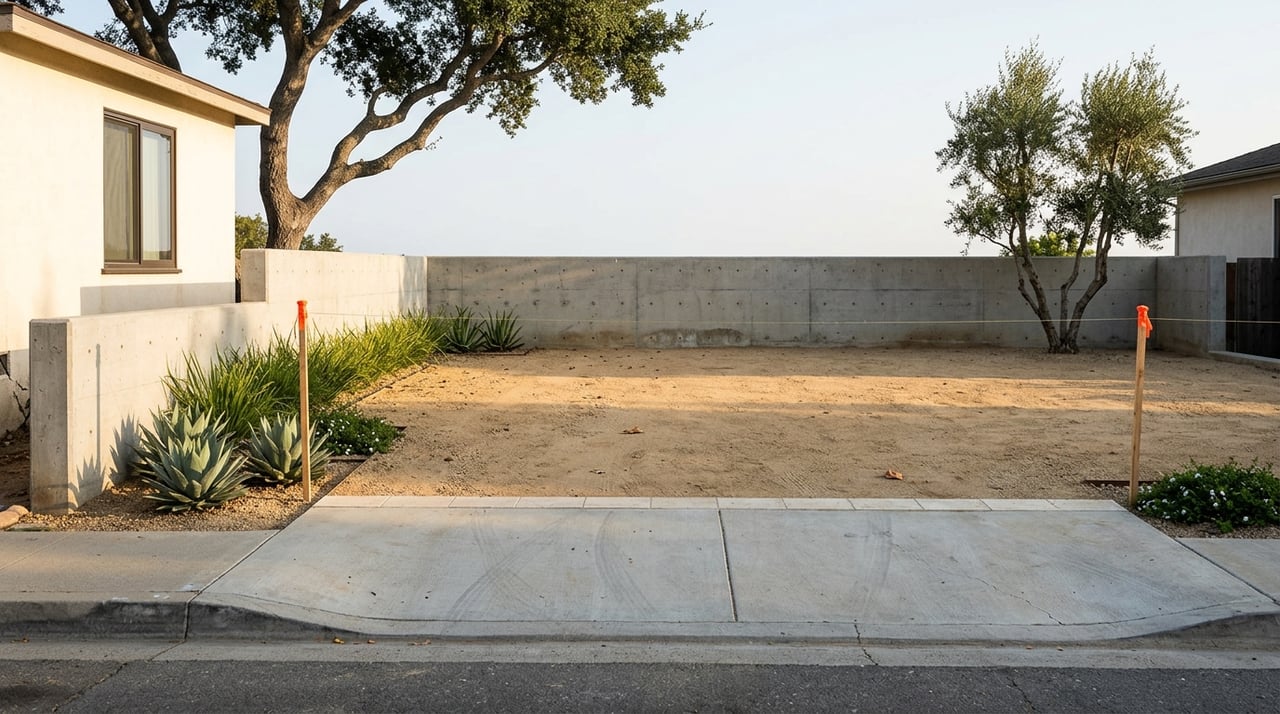
If you are looking at a Brentwood property and wondering whether the real value is in the house or in the land beneath it, you are asking the right question. In this part of Los Angeles, teardown pricing can shift quickly based on hillside rules, overlay zones, permit history, and the exact street or lot position. This guide will help you evaluate lot value opportunities in Brentwood with a more disciplined lens, so you can separate a simple teardown from a site with real development potential. Let’s dive in.
Why lot value matters in Brentwood
Brentwood is not a one-size-fits-all market. The Brentwood-Pacific Palisades Community Plan describes the area as predominantly low-density and very-low-density single-family, with hilly to mountainous terrain north of San Vicente Boulevard.
That matters because lot value in Brentwood is often tied less to raw square footage and more to what the site can realistically support. A flat lot in an infill location, a view lot in the hills, and a parcel with meaningful grading constraints may all trade very differently, even if they look similar at first glance.
Start with zoning and overlays
Before you underwrite any teardown, your first stop should be ZIMAS. It is the City of Los Angeles parcel research tool for zoning, environmental, seismic, housing, and public safety information, and it is the right first screen for a Brentwood acquisition memo.
In Brentwood, overlays can change the path to redevelopment in a major way. The community plan identifies local layers that may affect entitlement and review, including the Brentwood/Pacific Palisades dual coastal plan zone, Mulholland Scenic Parkway, San Vicente Scenic Corridor, and the West Los Angeles Transportation Improvement and Mitigation Specific Plan.
Do not assume the new zoning code applies
Los Angeles adopted its new zoning code in October 2024, but city rollout is phased through community plan updates. For Brentwood, that means many parcels may still be governed by the legacy framework and local overlays rather than a fully updated Westside zoning structure.
If you skip that step, you can easily overestimate what a site can support. In teardown underwriting, assumptions about future build size, entitlement timing, and review risk need to match the parcel’s current rules, not a broader city headline.
Hillside lots need a separate lens
Many of Brentwood’s most interesting redevelopment opportunities sit on hillside parcels. Those properties can be compelling, but they also need a more careful review of topography, access, grading, and fire-related constraints.
The Baseline Hillside Ordinance guide applies to certain residential zones that are designated as Hillside Area, and the city notes that you should verify applicability in ZIMAS because an H-zone suffix alone does not confirm coverage. The ordinance addresses setbacks, floor area, height, lot coverage, grading, street access, sewer connection, and fire protection.
Slope can affect density assumptions
The Brentwood-Pacific Palisades Community Plan states that hillside development should be limited according to infrastructure and natural topography. It also places areas with an average slope of 15% into minimum-density categories or more restrictive designations, using a slope-based formula for density in certain hillside areas.
For you, the practical takeaway is simple: larger land area does not always mean greater development utility. On a steep lot, usable building envelope, grading complexity, and circulation may matter far more than gross lot size.
Dirt movement can drive budget and timing
One of the biggest underwriting mistakes on hillside teardowns is treating grading as a secondary issue. The city’s Hillside Construction Regulations FAQ says projects that import or export 1,000 or more cubic yards of soil require haul-route approval from the Board of Building and Safety Commissioners.
That makes dirt movement a core cost and timeline variable, not a minor permit detail. If a site needs substantial cut, fill, or export, your schedule and carrying costs can shift meaningfully.
Fire hazard screening is part of site selection
Portions of Brentwood fall within a Very High Fire Hazard Severity Zone. For hillside acquisitions, wildfire access and evacuation screening should be part of your initial basis, especially when you are comparing multiple sites with similar asking prices.
This does not mean a parcel is unworkable. It means access, safety review, and site planning deserve attention early, before you assume a smooth permit path.
Public records can reveal the real story
A teardown opportunity is not just about what you can see from the street. In Brentwood, the difference between raw dirt and a more advanced development opportunity often shows up in public records.
The Los Angeles County Assessor can help you verify parcel details and recent sales activity, but the county also notes that boundary descriptions shown there are not legal descriptions. For exact boundaries, you still need title, deed, and survey work.
Check permit history before pricing the lot
LADBS building records can be searched by address, legal description, assessor number, or document number. City Planning records staff can also provide case files, Sanborn maps, and CEQA documents through BuildLA appointments.
That record trail can help you reconstruct prior permits, demolitions, variances, and entitlement efforts before closing. In other words, it helps you learn whether a seller is offering a true blank-slate site or a parcel with meaningful predevelopment work already completed.
Understand where zoning review fits
According to Los Angeles Planning, Zoning Review occurs after permit filing. If a project does not comply with zoning or requires extra review, discretionary entitlement approval must happen before a building permit can be issued.
The city also launched the Universal Planning Review Service in February 2026 to centralize zoning review, entitlement review, and CEQA screening for eligible projects. For underwriting purposes, that is another reminder that permit timing should be tied to a parcel’s actual review path, not a generic assumption.
Teardown value is not the same as lot size
Brentwood land pricing shows why teardown analysis has to go beyond simple dollars per lot square foot. The market often pays up for entitlement certainty, site quality, and saved time.
Recent examples in the research support that point. 11940 Goshen Ave sold in June 2024 for $2.75 million on a 7,501-square-foot development lot, or roughly $367 per site square foot. By contrast, Brentwood land listings show a much wider range, including larger hillside sites where pricing reflects a very different site-work profile and entitlement status.
Permit-ready lots deserve a different comp set
Current Brentwood examples include sites with issued demolition permits, shoring and retaining work, slope density analysis, RTI plans, or major grading already completed. Those details matter because the market is often pricing in reduced uncertainty and a shorter path to construction.
A parcel with meaningful predevelopment progress should not be comped like a raw teardown with unresolved grading, zoning, or access issues. When you evaluate lot value in Brentwood, permit status is often as important as location.
Exit pricing needs micro-market precision
Brentwood’s broader market numbers are useful, but they are only a starting point. Redfin’s Brentwood housing market data shows a February 2026 median sale price of $2.6 million and a median sale price per square foot of $956.
That baseline can help frame the neighborhood, but it is not enough for teardown underwriting. The research also shows recent sold homes ranging from approximately $1,282 per square foot to more than $2,000 per square foot depending on the property and location, while a custom home on Moreno Avenue sold for $15.2 million.
Use separate comp buckets
A disciplined Brentwood teardown model should use separate comp buckets for:
- Flat infill lots
- Permit-ready sites
- Estate parcels with hillside or view characteristics
- Finished homes in the same micro-location
If you rely only on Brentwood-wide medians, you can misread both the buy side and the exit. Prime streets, estate settings, and partially entitled parcels often behave very differently from neighborhood averages.
A practical teardown checklist
If you are evaluating a teardown or lot-value play in Brentwood, this is the screening sequence that usually creates the clearest picture:
- Confirm zoning, hillside status, and overlays in ZIMAS.
- Pull parcel details and recent sales data from the County Assessor.
- Review LADBS building records for prior permits, demolitions, and filing history.
- Verify whether discretionary approvals or planning clearances are still outstanding through Los Angeles Planning approvals resources.
- For hillside sites, check whether grading or haul-route approval remains unresolved.
- Match the exit comp set to the parcel’s exact micro-location and permit status, not just to Brentwood averages.
This process helps you decide whether the opportunity is truly land value, partially de-risked land value, or a time-compressed development opportunity that may justify a different basis.
When a teardown is worth pursuing
The strongest Brentwood teardown opportunities usually share one or more of these traits:
- Clear zoning and overlay profile
- A realistic building envelope for the site
- Manageable grading and access conditions
- Useful permit or entitlement progress already in place
- Exit comps that support the full development risk
On the other hand, a large lot with unresolved hillside constraints, uncertain access, or a weak comp set may look better on paper than it performs in practice. In Brentwood, what you can build, how quickly you can build it, and how much uncertainty remains are often the real drivers of lot value.
If you are weighing a teardown, redevelopment parcel, or off-market land opportunity in Brentwood, working with an advisor who understands both the numbers and the entitlement landscape can help you move with greater clarity. To discuss a site, valuation, or acquisition strategy, connect with Derrick Smith.
FAQs
What does lot value mean for a Brentwood teardown?
- Lot value in Brentwood usually refers to the value of the parcel based on its redevelopment potential, zoning, overlays, topography, permit status, and likely end value rather than the condition of the existing house.
How do you check zoning for a Brentwood lot?
- You can start with ZIMAS, which shows zoning, hillside status, overlays, environmental information, and other parcel-level details used in early diligence.
Why are hillside Brentwood lots harder to value?
- Hillside parcels may be affected by slope limits, grading costs, haul-route approvals, fire-related review, and reduced usable building area, so gross lot size alone does not tell you the full story.
Are Brentwood median home prices enough for teardown underwriting?
- No. Neighborhood medians can provide context, but teardown analysis should rely on micro-location-specific land and resale comps that reflect the parcel’s exact permit status, site conditions, and likely product type.
What records should you review before buying a Brentwood teardown?
- A strong diligence file usually includes ZIMAS data, Assessor parcel details, LADBS building records, City Planning case files, title and survey documents, and for hillside sites, geotechnical and grading assumptions.
Can permit history increase Brentwood lot value?
- Yes. A site with demolition permits, issued shoring work, RTI plans, or other completed predevelopment steps may command a premium because it can reduce uncertainty and shorten the path to construction.